When considering countertop choices, understanding the Difference Between Marble And Granite Surfaces is crucial. John Doe, a renowned expert in stone surfaces, once stated, "Choosing the right surface impacts both aesthetics and functionality." Marble and granite each have unique characteristics that influence their suitability for various applications.
Marble, with its luxurious appeal, is often favored for elegant spaces. Its diversity in color and veining adds a distinct charm. However, it is softer and more porous than granite, making it susceptible to staining and scratching. In contrast, granite presents a tougher surface, ideal for high-traffic areas. Its natural resistance to heat and abrasion makes it a practical choice for kitchens.
Yet, no material is flawless. While granite boasts durability, it can look too uniform for some preferences. Marble, though beautiful, requires more upkeep and can show wear over time. The Difference Between Marble And Granite Surfaces is not just about appearance, but also about how they fit into your lifestyle and aesthetic vision.
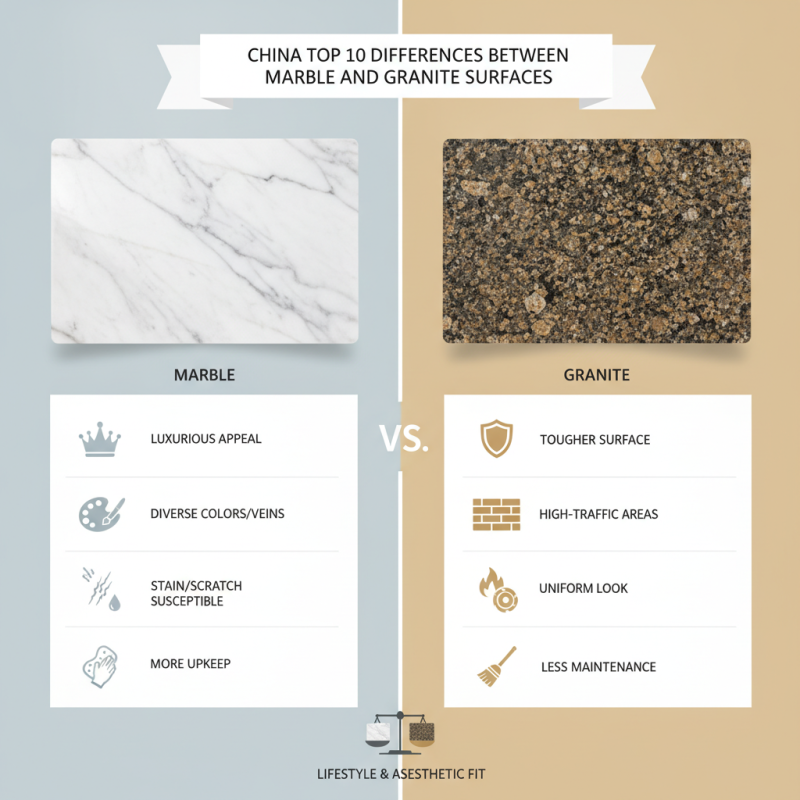
Marble and granite are both popular materials for surfaces, but they differ significantly in their composition and properties. Marble is a metamorphic rock that originates from limestone. Its primary components include calcite and dolomite, which give it a softer texture. This makes marble susceptible to scratches and etching from acidic substances.
On the other hand, granite is an igneous rock formed from cooled magma. It consists mostly of quartz, feldspar, and mica. This robust composition grants granite exceptional durability and resistance to heat and stains. Homeowners often prefer granite for kitchens where durability is paramount.
Tip: When selecting between marble and granite, consider the intended use. Marble suits areas wanting elegance, such as bathrooms. Granite thrives in high-traffic, functional spaces, like kitchens. Each material presents unique features that may appeal differently to individual preferences.
Understanding these differences can guide your choice. Marble ages gracefully but requires more maintenance. Granite, while tough, might seem less luxurious. Reflect on your lifestyle and maintenance willingness. This will lead to a more informed decision about your surface choice.
When considering the visual appearance of marble and granite surfaces, distinct differences emerge. Marble is known for its elegant veins and soft colors. These natural patterns create a luxurious feel, making it a popular choice for high-end interiors. Its surface can exhibit a glossy finish, enhancing its beauty.
In contrast, granite boasts a more granular texture with an array of colors. The variety in speckles and patterns offers a vibrant look. Granite's surface tends to be more rugged, providing a more natural and earthy appeal. The durability of granite is another factor to consider, as it withstands wear better than marble.
Both stones tell a story through their unique formations. Marble reflects transformation, showing metamorphic processes over time. Granite, however, reveals ancient geological activity, showcasing its robust history. Choosing between these two requires careful thought on aesthetics and longevity. Each has its share of imperfections, from subtle cracks in marble to the occasional uneven color in granite. The decision ultimately shapes the atmosphere of any space.
This chart illustrates the key differences between marble and granite surfaces in terms of various attributes such as hardness, porosity, cost, and aesthetic appeal.
When considering marble and granite surfaces, durability is a key factor. Granite is known for its exceptional strength. It can withstand heat and resist scratches. Marble, while beautiful, is softer. It is more susceptible to chips and etching. Regular maintenance is crucial for both materials, though their needs differ.
Granite surfaces require minimal care. A simple wipe down with mild soap and water suffices. Periodically sealing the surface enhances its durability. Marble, on the other hand, needs more attention. Its porous nature allows stains to penetrate easily. For marble, a specialized cleaner is often recommended. Frequent sealing is also essential to protect against moisture.
Some homeowners find the upkeep of marble daunting. The need for extra care can be a source of frustration. However, many appreciate the rich aesthetic of marble. Each surface has its unique charm. Understanding the maintenance requirements helps in making an informed choice. It's essential to weigh beauty against practicality.
When comparing marble and granite surfaces, cost is a primary consideration. Granite typically costs between $40 to $100 per square foot, depending on quality and origin. Marble ranges from $50 to $150 per square foot. This price discrepancy largely comes from their extraction processes and availability. According to industry reports, granite's abundance makes it cheaper to source than marble, which often comes from specific regions.
Installation costs also vary between the two. For granite, labor may cost around $30 to $80 per hour, while marble installation can go up to $100 per hour, influenced by its weight and fragility. Marble requires a more skilled labor force, as its delicate nature demands extra care during installation. The durability of granite usually allows for lower maintenance costs, further influencing overall price satisfaction.
Another essential point is that stone properties affect lifetime costs. Granite is generally more resistant to scratches and stains, leading to less frequent maintenance. On the other hand, marble's porous surface can lead to costly repairs over time. Consumers must weigh the initial investment against long-term upkeep. As a general guideline, many homeowners find granite a more budget-friendly option in the long run.
When it comes to home design, choosing between
marble and granite
surfaces is crucial. Each material has distinct characteristics. Marble
offers a sophisticated aesthetic with its unique veining. It works well in bathrooms and living spaces, adding
a touch of elegance. The subtle hues in marble can brighten up a room, creating a serene environment.
Granite, on the other hand, is a powerhouse in durability.
It is ideal for kitchen countertops due to its resistance to scratching and heat. Homeowners appreciate its
variety of colors and patterns, allowing for greater customization. However, both materials require
maintenance. Marble is more prone to stains, while granite can chip
if not treated carefully.
Choosing between them can be challenging. Reflecting on your lifestyle is essential. Do you have kids or pets?
Consider how each surface will hold up under daily use. Your choice should blend beauty
with practicality. It's worth seeking advice from professionals
in the industry to understand the nuances of each material better. Having the right surface can enhance your
home’s functionality and visual appeal.
: Marble is softer and comes from limestone. Granite is tougher and originates from cooled magma.
Marble has elegant veins and soft colors, while granite features a granular texture with diverse colors and speckles.
Granite is preferred for kitchens due to its durability and resistance to heat and stains.
Marble requires frequent sealing and specialized cleaners due to its porous nature.
Granite needs minimal care, just a wipe with mild soap and periodic sealing for durability.
Marble’s elegant appearance and glossy finish create a luxurious feel, making it popular for high-end interiors.
Yes, granite is known for its exceptional strength and resistance to scratches and heat.
Marble may have subtle cracks, while granite can show uneven color patterns.
Yes, some find the upkeep of marble daunting due to its higher maintenance needs compared to granite.
The decision shapes the atmosphere, reflecting personal style and practicality concerns in high-traffic areas.
The article titled "China Top 10 Differences Between Marble and Granite Surfaces" explores the key distinctions between these two popular building materials. It begins with definitions and compositions, highlighting that marble is a metamorphic rock composed primarily of calcite, while granite is an igneous rock made up of quartz, feldspar, and mica. The visual appearance of both surfaces is discussed, with marble typically showcasing softer colors and intricate veining, whereas granite exhibits a speckled look with varied hues.
In terms of durability, granite tends to be more resistant to scratches and stains, making it easier to maintain compared to the more porous marble. Cost is another significant factor, with variations that can affect choices in home design. The article concludes by addressing common applications and the suitability of marble and granite in different areas of home design. Overall, understanding the difference between marble and granite surfaces is crucial for homeowners and designers selecting the best material for their needs.

CKY Home